
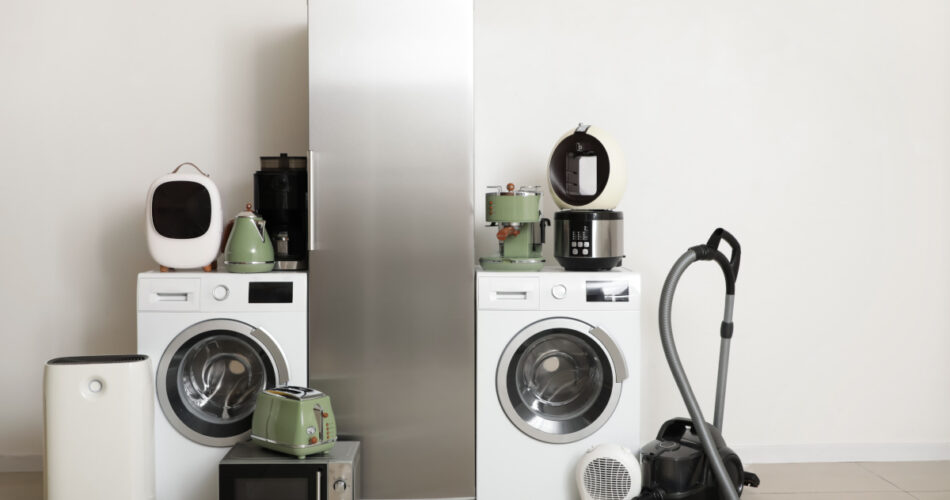
You can ship UK electrical appliances overseas, but not every item is worth taking. Before adding electrical goods to your move, check three things: the plug type used in your destination country, the voltage the appliance is designed for, and whether the item is valuable enough to justify the shipping space.
Some UK appliances work overseas with a simple plug adaptor. Others need a voltage transformer, and in countries like the USA, Canada and Japan many UK appliances are not practical to use unless they are dual voltage.
As a removals company, our advice is practical rather than purely technical. If an electrical item is expensive, compatible, specialist or hard to replace overseas, it is often worth shipping. If it is old, low-cost, bulky or voltage-sensitive, it is usually better replaced after you arrive.
Table of Contents
Should you take UK electrical items when moving abroad?
Electrical items are often included in overseas shipments, especially when you are moving a full household rather than just boxes and bags. It is still worth being selective.
Before deciding what to take, ask:
- Will it work safely in the destination country?
- Does it need only a plug adaptor, or a voltage transformer?
- Is it dual voltage?
- Is it expensive to replace overseas?
- Is it old, bulky or close to replacement age?
- Will it take up valuable space in your shipment?
In many cases people ship the higher-value electrical goods and replace smaller everyday appliances locally.
The three things to check before shipping electrical goods
1. Plug type
The UK uses the Type G three-pin plug. Some countries use the same type, but many do not. If your destination uses a different socket, you will need a plug adaptor. An adaptor only changes the plug shape. It does not change the voltage.
2. Voltage
UK appliances are designed for 230V at 50Hz. Much of the world (Europe, Australia, New Zealand, South Africa, the UAE, Singapore, Cyprus, Malta and Thailand) runs at a similar 220V to 240V, which makes UK appliances easier to use. The big exceptions are the USA and Canada at 120V, and Japan at just 100V, where many UK appliances will not run properly without a transformer.
3. Whether the item is worth shipping
This is often the most important question. A high-value television, computer, audio system or specialist piece of equipment may be worth shipping if it is compatible and properly packed. A kettle, toaster, iron or older appliance is usually cheaper and easier to replace after arrival.
Check the appliance label
Most electrical items have a small label or plate showing the voltage and frequency they are designed for, usually on the plug, charger, back panel or underside.

If it reads something like Input: 100-240V, 50/60Hz, the item is dual voltage and will usually work in most countries with the correct plug adaptor.
If it reads only 220-240V, 50Hz, it is designed for UK-style voltage and may not work properly in a lower-voltage country without a transformer.
Always check each appliance individually. Do not assume all your UK items behave the same way overseas.
UK electrical appliances by destination
The table below is a practical guide for common removals destinations, to help you decide what is worth taking. The plug and voltage figures are each country’s domestic standard. Always check the label on each appliance before use, as this is practical removals advice, not electrical safety certification.
| Destination | Plug type | Voltage and frequency | Practical moving advice |
| United Kingdom (for reference) | Type G | 230V, 50Hz | This is the UK standard your appliances are built for. |
| Australia | Type I (not UK) | 230V, 50Hz | Same voltage as the UK, so many appliances work with a plug adaptor. Check each item. |
| New Zealand | Type I (not UK) | 230V, 50Hz | As Australia: similar voltage, adaptor needed, usually fine for compatible items. |
| USA | Type A or B (not UK) | 120V, 60Hz | Lower voltage and different frequency. Many UK appliances need a transformer or are not practical. Favour dual-voltage items. |
| Canada | Type A or B (not UK) | 120V, 60Hz | As the USA. Dual-voltage electronics travel best, heat and motor appliances often do not. |
| South Africa | Type M, plus newer Type N (not UK) | 230V, 50Hz | Same voltage, so many items work with an adaptor. Note the large Type M pins. |
| UAE / Dubai | Type G, same as UK (also C/D) | 230V, 50Hz | Same plug and voltage as the UK, so most appliances are straightforward. Still check high-value items. |
| Singapore | Type G, same as UK | 230V, 50Hz | Same plug and voltage. UK appliances generally work directly. |
| Cyprus | Type G, same as UK | 230V, 50Hz | Same plug and voltage. UK appliances generally work directly. |
| Malta | Type G, same as UK | 230V, 50Hz | Same plug and voltage. UK appliances generally work directly. |
| Thailand | Types A, B, C and O (not UK) | 230V, 50Hz | Voltage matches the UK, but you will need an adaptor for the plug. |
| Japan | Type A or B (not UK) | 100V, 50/60Hz | Lowest voltage in the world, and the frequency splits east and west. Most UK appliances are impractical unless dual voltage. |
Popular Removals Destinations: Practical Notes
USA and Canada
Both use a different plug (Type A or B) and a lower voltage (120V) than the UK, plus a 60Hz frequency. Many UK appliances built only for 230V will not run safely from a standard North American socket without a suitable transformer. Dual-voltage items such as laptop and phone chargers and much modern electronics travel well. Large, heat-producing or motor-driven appliances usually do not, and are often better replaced on arrival.
Japan
Japan runs at 100V, the lowest standard voltage in the world, and the frequency splits between 50Hz in the east (including Tokyo) and 60Hz in the west. Most UK appliances are impractical here unless they are explicitly dual voltage, so keep shipped electricals to a careful minimum.
Australia, New Zealand and South Africa
The voltage is the same as the UK (230V), so the main hurdle is the plug. Australia and New Zealand use Type I, and South Africa mainly the large Type M (with the newer Type N appearing), so you will need the right adaptor. Many compatible items are worth taking, but still weigh up age, condition and value before filling your shipment.
UAE, Singapore, Cyprus and Malta
These are the easy ones. They use the same Type G plug and the same 230V supply as the UK, so most appliances work directly with no adaptor. Even so, low-cost or bulky items can still be cheaper to replace locally, so be selective.
Electrical items usually worth shipping
Some items are often worth including, particularly if they are high-value, compatible and properly packed:
- televisions
- computers and monitors
- audio equipment
- games consoles
- specialist tools
- high-value kitchen appliances
The more expensive or specialist the item, the more likely it is worth taking, provided it can be used safely at your destination.
Electrical items that may not be worth shipping
Some items are usually cheaper or easier to replace after arrival:
- kettles
- toasters
- irons
- hairdryers
- old white goods
- low-cost kitchen appliances
- appliances near the end of their useful life
- appliances that need a bulky transformer
- items that are large, heavy or fragile but low in value
Heat-producing appliances are especially problematic when voltage differs, so check these carefully before shipping.
Be careful with adaptors, converters and transformers
A plug adaptor only changes the shape of the plug. It does not change the voltage. If you are moving to a country with a different voltage, some appliances will need a voltage converter or transformer, but this is not always practical. Transformers can be bulky, expensive and inconvenient for daily use, and some appliances perform poorly even with one, especially anything that relies on a heating element or motor speed. For many low-cost appliances, replacing them overseas is the simpler option.
How 1st Move packs electrical items for overseas shipping
Electrical items need careful packing for international removals, as they can be fragile, heavy or awkwardly shaped. At 1st Move International, suitable electrical goods are professionally wrapped, protected and secured for the journey as part of our removals service.
Our unique safer packing system keeps your goods together, reduces handling and provides better protection during shipping. This is particularly useful for fragile electronics, televisions, monitors, audio equipment and more.
Before collection: electrical goods checklist
Before your collection date, we recommend you:
- make a list of the electrical items you plan to ship
- check the voltage label on each appliance
- identify anything that is dual voltage
- remove batteries where required
- back up computers and digital devices
- photograph cable connections for easier setup later
- remove printer ink cartridges if advised
- check whether low-cost items are worth replacing overseas
This helps avoid surprises after arrival and lets your shipment be planned more accurately.
Can 1st Move advise what electrical items to take?
Yes. Our team can help you think through which electrical items are worth shipping. We cannot certify whether every appliance will be suitable for use overseas, but we can help with the practical removals questions:
- how much space the item will take
- whether it needs special packing
- whether it is worth shipping
- whether similar items are commonly shipped to your destination
- whether replacement overseas may be more practical
For technical compatibility, always check the manufacturer’s label and guidance.
FAQ: shipping UK electrical appliances overseas
Can I ship electrical appliances overseas?
Yes. Electrical appliances can usually be shipped as part of an international removals shipment, provided they are safe, clean and suitable for transport. Whether they are worth taking depends on their value, condition, size and compatibility with the destination.
Will UK appliances work abroad?
Some will, but not all. UK appliances are built for UK plugs, 230V and 50Hz. They work easily in countries with similar electrical systems, but may not suit lower-voltage countries like the USA, Canada or Japan unless they are dual voltage or used with a transformer.
Is a plug adaptor enough?
Only sometimes. An adaptor changes the plug shape but not the voltage. If the destination uses a different voltage, an adaptor alone is not enough.
What does dual voltage mean?
Dual voltage means the appliance works across a wider range, usually shown as 100-240V on the label. Many phone, laptop and tablet chargers are dual voltage, but larger appliances often are not.
Should I ship small appliances such as kettles and toasters?
Usually not, unless they are new, high quality or particularly important to you. In most cases small appliances are easier to replace after arrival.
Can 1st Move pack electrical goods?
Yes. 1st Move International can professionally pack suitable electrical goods as part of your shipment, and our team can advise on packing during your quote or move planning.
Planning an international move?
If you are moving overseas and are unsure what to take, our team can help you plan your shipment. Tell us where you are moving, what electrical items you are considering and whether you are shipping a few boxes or a full household, and we can provide a tailored quote and practical advice on what is worth including.
Alternatively, check see our removals services to popular destinations here for more information or for a free quote: