

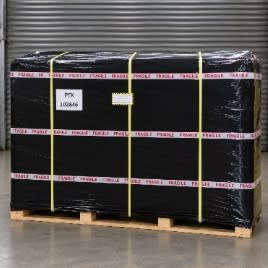
1 pallet · 1.861 cbm · UK to New York, NY, United States · PFX/102866
View on Facebook →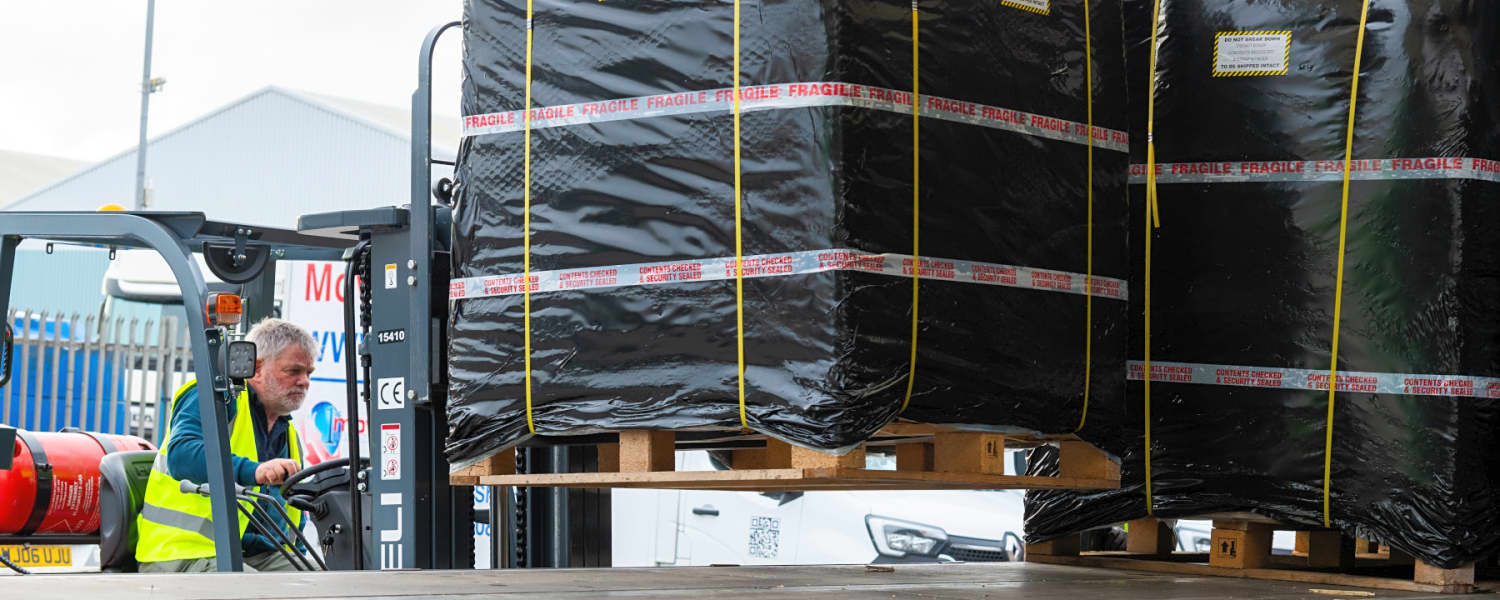
At 1st Move International, we do more than simply wrap your belongings and load them into a shipping container.
Your furniture, boxes and personal effects are professionally packed and built onto their own individual pallet before container loading. We choose the correct pallet size, protect the base, pack carefully to reduce wasted space, add cardboard and bubble protection, shrink-wrap the completed load, strap-band it securely, label and security seal it, then precisely measure and photograph the finished shipment.
Packed. Protected. Measured. Photographed. Certified.
With traditional shared-container removals, household goods are often individually wrapped and loaded loose into a shipping container alongside other customers' possessions. Those items may then need to be handled again when the container is unloaded, sorted at destination, moved through a warehouse and loaded again for final delivery.
Every additional handling point creates another opportunity for belongings to be knocked, scratched, misplaced, separated or mixed with other shipments.
1st Move takes a different approach.
For more than 28 years, we have built each customer's belongings into their own individual palletised shipment before container loading. Once complete, the whole pallet can be moved and loaded as one secured unit wherever practical, helping keep your belongings together and reducing unnecessary handling of individual boxes and furniture.
Watch the video below to see exactly how we build, protect and secure a 1st Move pallet before it is loaded for shipping.
Palletised shipping has been used for almost 100 years and is a tried-and-tested way to protect goods being shipped overseas, allowing them to be moved as one secure unit rather than handled individually.
That same principle sits behind our packing system.
For more than 28 years, 1st Move has built customers’ belongings into their own protected palletised shipments before container loading. Our Shrink-Fast packing method is designed to keep each shipment securely together, reduce unnecessary handling in the UK and at destination, and help protect your belongings throughout their journey.
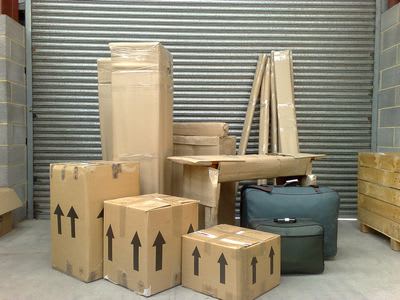
Firstly, we pack individual items into cartons, crates or boxes. Furniture and larger items are paper and bubble wrapped for extra protection.
To reduce shipping costs, we utilise all empty spaces where possible - inside drawers, between the legs of chairs and by packing soft furnishings such as bedding inside white goods. Space costs money!
Our packers are experts at filling up those empty spaces to ensure maximum cost savings for your move.
This process makes for a fantastic, tight, safe and secure package so your household goods are not rattling around inside a shipping container on their journey overseas. Simply a great way to ship your stuff.
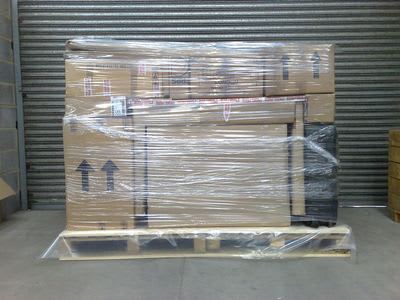

Once packed and arranged tightly onto your pallet, your shipment is then wrapped with a clear stretch-wrap film to bind all items tightly together to minimise movement in transit.
A further layer of double walled cardboard sheet, and 2 layers of export standard bubble wrap are added to help protect your goods from accidental knocks or bumps – and that’s just the start!
Now for the good bit. We use a 125-micron polymer plastic film (shrink-wrap) to encase your shipment. This heavy-duty plastic bag is designed to shrink to a tight fit when heat treated. Strong, durable, weather and waterproof. It comes off our rollers like a large open ended bag.
We seal one end of this bag and cover your pallet to form a safe, secure, strong and weatherproof shroud. This is then carefully heat treated to shrink fast and bind the whole pallet tightly together. Magnificent!

We’re not finished yet. Polypropylene strapping is then used to further secure the pallet. With a breaking strain of 160kg, this tough export strapping is fed under the wooden pallet and over the top of your shipment (four times on a smaller pallet - six times on larger pallets).
These straps are then joined and sealed together with a metal seal. The crimped seal closure provides a tight grip on the strapping for extra security in transit. Now there is no side to side movement whilst your goods are inside our shipping container. What a great idea!

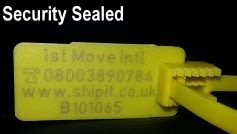
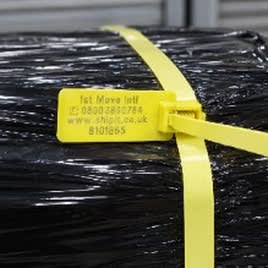
Your pallet is then labelled and security sealed with a unique 1st Move ID Number. The security seal shown is B101065. Each seal has a different tracking code unique to your shipment.
This number is recorded on all shipping documentation and provides a detailed paper trail in the unlikely event that the pallets have been tampered with. That doesn’t happen on our watch!
The seal is a visual reminder to others that we can track the security of your pallet throughout transit. From our UK warehouse right up to your front door, your goods are being logged and checked every step of the way. Nobody messes with a 1st Move Pallet!
Finally, we precisely measure your pallet. Length, width and height are measured exactly to the nearest centimetre. This gives us your chargeable volume and our world-famous price guarantee, so that you know you’ll be charged for the EXACT size of your house move. No nasty surprises when you get your final bill.
These measurements are clearly recorded on your pallets and are subject to additional checks by the shipping line and port authorities. You can also check the sizes when the goods arrive at your front door.
For larger moves that require full containers we pack a little differently. To see for yourself how we do it, check out the loading video on our container shipping page.
There is a lot more involved in building a 1st Move pallet than simply wrapping furniture and placing it onto a wooden base.
The process below takes you through exactly how we prepare, protect, build, secure, measure and photograph each shipment before container loading. It is a reasonably detailed read, but every stage has a purpose — from choosing the correct pallet and reducing wasted space to protecting vulnerable items, securing the finished load and confirming the final packed volume.
If you have ever wondered what actually happens to your belongings after collection and before they are loaded for shipping, this is where you can see the full process from start to finish.
We do not use one pallet size for every move. The pallet is selected according to the furniture and belongings being shipped.
Smaller consignments may fit onto a conventional pallet, while longer items such as sofas can require larger or double pallets to provide the correct support.
Choosing the right pallet is important. A pallet that is too small can leave items overhanging the edge and more vulnerable to damage. A pallet that is unnecessarily large can increase the overall cubic volume.
Before anything is loaded, we cover the timber pallet with a heavy-duty cardboard base. This creates a clean, flat protective barrier between the wooden pallet and your belongings.
Protection therefore starts underneath your shipment — not just around it.
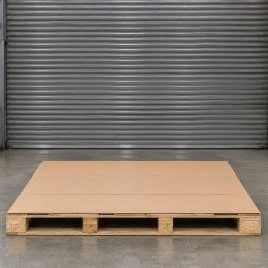
Smaller household items are packed into suitable cartons, boxes or crates. Furniture and larger items are individually protected before being placed onto the pallet.
Depending on the item, this can include:
Not every item needs exactly the same type of packing. Good export packing means using the right protection for the particular item.
Where appropriate, furniture can also be dismantled. This might include bed frames, tables, shelving, desks and other furniture designed to come apart.
Dismantling can protect the furniture and can also make a significant difference to the amount of space it occupies. A dining table with its legs removed can take up far less room than exactly the same table left fully assembled.
And when your shipping cost is influenced by volume, that matters.
This is where experienced packing really makes a difference.
Household belongings do not arrive in neat, identical boxes. A typical shipment may include sofas, chairs, tables, wardrobes, televisions, cartons, mirrors, bed frames, lamps and unusually shaped pieces of furniture.
Our packing teams effectively build the shipment like a three-dimensional game of Tetris. Items are positioned so that their shapes work together efficiently while still protecting the contents.
We also look carefully for unnecessary dead space.
With shared-container shipping, unused space still occupies container capacity.
If your finished shipment occupies 8 cubic metres, you are paying for approximately 8 cubic metres whether that space contains furniture or simply trapped air.
That is why our teams look for suitable opportunities to reduce wasted volume.
Where appropriate, this can include using space:
Soft items such as bedding can sometimes be used to occupy suitable spaces that might otherwise remain empty.
The objective is not to force belongings into every available gap. It is to use space intelligently without compromising protection.
How goods are positioned also matters.
Strong and heavy items are generally placed towards the lower part of the pallet where appropriate. Lighter and more fragile items are positioned where they will not be crushed or exposed to unnecessary pressure.
The packing team considers weight distribution, carton strength, fragile items, pressure points, balance, overhang and overall pallet stability.
The pallet is continuously reviewed as it is built. Sometimes an item may be repositioned if a better configuration becomes apparent.
That takes longer than simply putting everything wherever it fits. But it produces a better shipment.
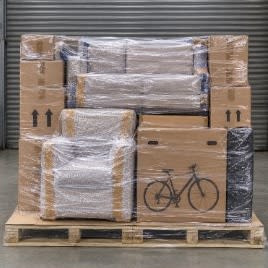
As the pallet develops, we work towards a compact, stable shape.
A compact pallet is easier to protect, easier to handle and less likely to contain unnecessary cubic volume.
We also minimise overhang wherever possible. Furniture projecting beyond the pallet can be more exposed to damage and may increase the overall external dimensions of the shipment.
Before the outer protective layers are applied, the completed internal build is checked again. The pallet should already be stable before we enclose it.
The outer packing reinforces a good build. It does not disguise a poor one.
Once the shipment has been arranged tightly on the pallet, we begin binding the whole load together.
First, clear stretch-wrap film is applied around the shipment. This helps hold individual packed items together and reduce movement.
We then apply double-walled cardboard sheeting around the pallet. This creates a substantial protective cardboard skin around the shipment.
Rather than leaving the individual cartons and pieces of wrapped furniture exposed, the entire load begins to become one enclosed unit.
Additional export-standard bubble protection is then added around the built pallet.
By this stage your shipment already has several layers of protection:
Individual item wrapping + heavy cardboard pallet base + tight pallet build + stretch film + double-wall cardboard skin + additional bubble protection
And we are still not finished.
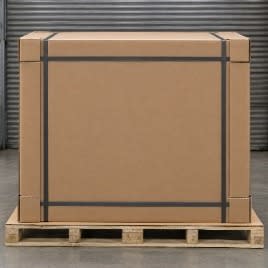
The complete pallet is then enclosed within our heavy-duty 125-micron polymer Shrink-Fast film.
The material comes from the roll as a large open-ended covering. One end is sealed and the film is placed over the entire palletised shipment to form a protective shroud.
The film is then carefully heat treated. As it reacts to the heat, it contracts tightly around the shape of the shipment beneath it.
This provides a strong external protective layer and helps bind the pallet further into one consolidated freight unit.
It also provides an additional barrier against normal moisture and weather exposure during freight handling.
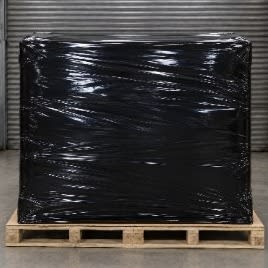
Even after the shipment has been wrapped and Shrink-Fast protected, we add another securing system.
Heavy-duty polypropylene export strapping is passed around the completed pallet. The strapping we use has a breaking strain of approximately 160kg.
Importantly, the banding is passed under the wooden pallet and over the top of the shipment. This means the load is physically secured back to the pallet base.
Smaller pallets typically receive four straps. Larger pallets may receive six, depending on their size and shape.
Each strap is tensioned firmly and joined using a metal seal. The seal is crimped onto the polypropylene banding to hold the tension.
At this stage the goods, protective materials and wooden pallet have become one mechanically secured freight unit.
Each completed pallet is clearly labelled with the relevant shipment information.
Where a customer has more than one pallet, each pallet can be individually identified while still forming part of the same overall move.
For example:
Pallet 1 of 4 | Pallet 2 of 4 | Pallet 3 of 4 | Pallet 4 of 4
This provides far greater control than treating dozens of individual cartons and pieces of furniture as separate freight items.
Labelling and security sealing are separate parts of the process.
Each finished pallet receives a uniquely numbered 1st Move security seal. Every seal carries its own individual reference number.
That reference is recorded against the shipment documentation.
The seal provides a visible indication if the secured pallet has been interfered with after packing. It creates another clear layer of accountability between our UK warehouse and the shipment's onward journey.
This is one of the most important parts of our process.
Only after the pallet has been completely packed do we establish its final dimensions.
We measure the finished shipment.
Not the furniture before packing. Not an estimated pile of goods. Not an approximate amount of container space. The actual completed pallet.
The final length, width and height are measured to the nearest centimetre.
Those measurements allow us to calculate the finished packed volume in cubic metres — cbm.
For shared-container shipping, cubic volume is one of the key factors affecting price. That means packing efficiency and accurate measurement matter.
If two movers are given exactly the same possessions, the final volume does not necessarily have to be the same.
Imagine one mover packs the goods efficiently and the finished shipment measures 7cbm. Another mover uses a less space-efficient packing method and the same belongings occupy 9cbm.
That second shipment occupies almost 29% more volume.
If charges are based on volume, that can make a substantial difference to the shipping cost.
This is why good packing is not just about preventing damage. It can also help control what you pay.
Once the pallet is complete, we photograph the finished shipment.
This provides visible evidence of how your belongings were packed before container loading.
You are not simply being given a volume figure on an invoice. You can see the actual finished freight unit behind that measurement.
The photograph shows that the shipment has been palletised, protected, wrapped, secured, labelled and prepared for export.
Over the years, 1st Move has built up an extensive photographic archive of genuine customer shipments.
These are real moves — not staged marketing images.
For applicable palletised shared-container shipments, the final measured volume can also be recorded on your 1st Move Volume Guarantee Certificate.
Where your move consists of several pallets, each pallet can be measured individually. The individual volumes can then be combined to show the total finished cubic volume of your shipment.
That means where volume affects what you pay, you have:
Every time an individual box or piece of furniture is handled separately, there is another opportunity for it to be knocked, scratched, dropped, misplaced, separated or stacked incorrectly.
Our palletised system is designed to reduce that individual handling.
Once the pallet has been completed, the objective is for the whole pallet to become the item being handled wherever practical.
Your belongings remain grouped together within their own secured shipment.
That is particularly important on an international move, where goods can pass through several stages between collection in the UK and delivery overseas.
Most of the costs involved in international Removals are based on cubic volume, so there is one very important question worth asking:
How will you establish my final volume?
Will it remain an estimate?
Will somebody approximate how much container space has been used?
Or will the finished shipment actually be measured?
At 1st Move International, we measure the completed pallet.
That creates a physical, repeatable measurement of the shipment being transported. And because we photograph the completed pallet, you can see the shipment behind that figure.
Packed, measured, and photographed before shipping
These are genuine 1st Move customer shipments, photographed after packing and palletisation and before container loading.
Each pallet shows the finished shipment exactly as it leaves our packing process. Protected, wrapped, strap-banded, security sealed, labelled and ready for shipping.
You can also see the actual number of pallets and measured cubic volume for each move, giving you a clear picture of how we prepare, protect and measure real customer shipments before they leave the UK.
1 pallet · 1.861 cbm · UK to New York, NY, United States · PFX/102866
View on Facebook →
2 pallets · 8.546 cbm · UK to Calgary, Canada · PFX/102839
View on Facebook →
1 pallet · 2.289 cbm · UK to Exeter, CA, United States · PFX/102820
View on Facebook →
3 pallets · 9.329 cbm · UK to Singapore, Singapore · PFX/102757
View on Facebook →
1 pallet · 2.739 cbm · UK to Reservoir, VIC, Australia · PFX/102665
View on Facebook →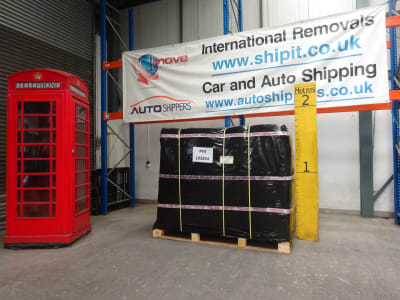
1 pallet · 4.095 cbm · UK to New York, United States · PFX/102854
View on Facebook →
Takes 60 seconds. Free, and no obligation.


Kathryn
London to Kentucky, USAHonestly, I was amazed at the packing. The wooden furniture was covered in cardboard to prevent scratches. The mattress was wrapped in plastic. The entire pallet was wrapped in plastic, bubble wrap, cardboard, and shrink wrap. I seriously think it could have hit the water and not gotten the contents wet! TOTALLY PLEASED.
Read on Trustpilot
Julian
Warrington to Alberta, CanadaThese guys are the best, superb service and amazing packing skills, everything arrived safely and not a scratch or broken glass in sight.
Read on Trustpilot
Eleanor
Wooler to Auckland, New ZealandGreat service, amazing packing of my things onto the pallet, smooth pick-up of items in the UK, and my items have arrived in great condition to New Zealand. I wholeheartedly recommend 1st Move International for shipping items overseas!
Read on Trustpilot
Dan
London to New York, USAReally great, friendly and professional service; helped us at every step and made sure the entire process is clear, not to mention the amazing packing skills!
Read on Trustpilot