
Australia B534 Form Guide for Personal Effects
If you are moving to Australia and shipping household goods or personal effects separately from your own travel, you will usually need to complete a B534 Unaccompanied Personal Effects Statement before your shipment can be cleared for delivery.
This guide explains what the form is, when you need it, what to declare and how 1st Move International helps you through the process.
Just looking for the form? You can download the official B534 form directly from Australian Border Force here:
B534 Unaccompanied Personal Effects Statement — Australian Border Force
Table of Contents
- What Is the B534 Form?
- When Do I Need to Submit the B534 Form?
- Why the B534 Form Matters
- What Information Will You Need?
- Key Rules for Completing the B534 Form
- What Must Be Declared on the B534 Form?
- Australian Biosecurity Declarations
- How 1st Move International Helps
- B534 Form FAQs
What Is the B534 Form?
The B534 is the Australian customs form used when personal effects arrive in Australia separately from the owner.
It is issued by Australian Border Force and is used to assess household goods, furniture and personal belongings for customs duty, GST, restricted items and biosecurity risks.
Most customers shipping personal effects from the UK to Australia will need to complete one. Your 1st Move Move Manager will confirm whether it applies to your shipment and help you understand what information is needed.
When Do I Need to Submit the B534 Form?
The B534 form should normally be completed and submitted before your shipment arrives in Australia.
This matters because the form is part of the customs and biosecurity clearance process. If the form is missing or incomplete when your shipment reaches Australia, clearance may be delayed and additional handling or storage charges may apply.
As a general guide:
- Complete the form once you have the details you need from your Move Manager.
- Submit it to 1st Move International or your destination agent well before the vessel's estimated arrival date.
- Do not wait until after you have travelled to Australia to start the form.
- Do not guess freight or shipment details if they have not yet been confirmed.
Your Move Manager will give you a clear deadline based on your sailing schedule. If you are unsure about any part of the form, ask before submitting it.
Why the B534 Form Matters
The B534 form allows Australian Border Force and biosecurity officers to assess your shipment before it is released.
It helps them check whether your goods contain:
- Restricted or prohibited items
- Goods that may attract duty or GST
- Food, plant material, animal products or wooden items requiring biosecurity inspection
- Outdoor equipment that may carry soil, seeds or organic material
- Goods owned for less than 12 months
- Items that require further information before clearance
Completing the form accurately helps reduce the risk of avoidable delays, inspection queries and additional charges when your shipment arrives.
What Information Will You Need?
Before completing the B534 form, have the following to hand:
- Your passport details
- Your intended or actual residential address in Australia
- Your arrival date or estimated arrival date in Australia
- Your flight number, ship name, arrival airport or arrival port
- Shipment details where available
- A clear list of any goods that need to be declared
- Your passport signature page, if requested
Some shipment details, such as vessel name, container number or bill of lading reference, may not be available when you first receive the form. Your Move Manager will provide these when they are confirmed.
Do not guess freight details.
Key Rules for Completing the B534 Form
The B534 is a legal declaration and must be completed honestly and accurately.
As a practical guide:
- Complete the form in English.
- Use your name exactly as it appears in your passport.
- Answer all sections that apply to your move.
- Do not complete fields where shipment details have not yet been confirmed.
- Ask your Move Manager if you are unsure which shipment fields to complete.
- Initial any corrections or alterations.
- Sign and date the form where required.
- Do not sign a blank or incomplete form.
- Attach a separate sheet if there is not enough space to list declared items.
- Keep a copy of the completed form for your own records.
If you are unsure whether something should be declared, declare it. Providing details is safer than omitting them, and declaring an item does not automatically mean it will be refused.
What Must Be Declared on the B534 Form?
The B534 form asks you to declare goods that may require customs, duty, GST or biosecurity assessment.
This can include:
- Restricted or controlled goods
- Alcohol, tobacco or goods that may attract duty or GST
- Goods owned for less than 12 months
- Commercial or business-use goods
- Medicines or health-related products
- Food, wooden items, plant material, animal products or outdoor equipment
If you answer "Yes" to any declaration question, provide clear details on the form or attach a separate list if there is not enough space.
Declaring an item does not automatically mean it will be refused. It allows Australian Border Force and biosecurity officers to assess it correctly.
For detailed guidance on restricted or prohibited items, see our Australia Customs and Prohibited Items Guide.
Australian Biosecurity Declarations
Australia has strict biosecurity rules, and the B534 form asks whether your shipment contains items that may need inspection, including food, plant material, animal products, wooden items, outdoor equipment or goods that may carry soil or organic matter.
These items do not automatically cause a problem, but they must be declared correctly so Australian biosecurity officers can assess them on arrival.
Before your shipment is collected, outdoor items should be clean and free from soil, grass, seeds, insects and plant material.
For more detailed preparation advice, read our guide: What to Clean Before Shipping to Australia.
How 1st Move International Helps
Customs paperwork is something many customers worry about unnecessarily. Our Move Managers handle Australian customs documentation on regular shipments and will guide you through the process step by step.
We help you understand:
- Whether the B534 form applies to your move
- What shipment details are needed and when they will be available
- Which goods may need to be declared
- How to prepare outdoor or biosecurity-risk items before collection
- What the destination agent needs before your shipment arrives
- How customs and biosecurity clearance normally works for personal effects shipments
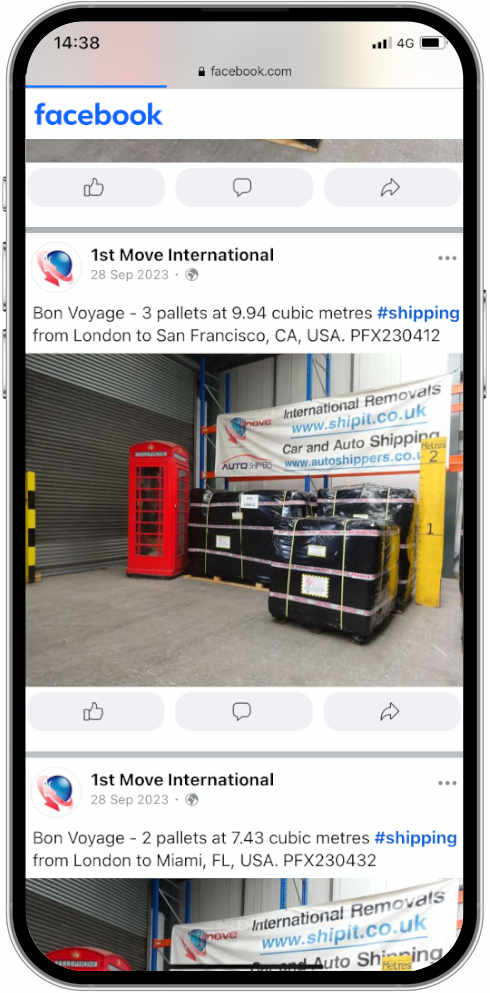
We also professionally export-pack your belongings and secure them onto individual pallets using our shrink-fast packing system.
Every shipment is export-wrapped, strapped, banded and security sealed, helping keep your belongings together as one protected unit throughout the journey to Australia.
B534 Form FAQs
Do I need a B534 form when moving to Australia?
Yes, in most cases. If your household goods or personal effects are arriving in Australia separately from you, you will usually need to complete a B534 Unaccompanied Personal Effects Statement.
Your Move Manager will confirm whether it applies to your specific shipment.
When do I need to submit the B534 form?
The form should normally be submitted before your shipment arrives in Australia.
Your Move Manager will give you a specific deadline based on your sailing schedule. Do not wait until after you have travelled to Australia to start the form.
Can 1st Move complete the B534 form for me?
The B534 is a personal declaration that must be signed by you as the owner of the goods.
However, we guide you through the process, confirm shipment details when they are available and answer questions about what information is required.
What if I do not know my shipment details yet?
Some details, such as vessel name, container number or bill of lading reference, may not be available when you first receive the form.
Your Move Manager will provide these when confirmed. Do not guess freight details.
Should I declare something if I am unsure?
Yes. If you are uncertain whether an item needs to be declared, declare it and provide details.
Declaring an item does not mean it will be refused. It allows Australian authorities to assess it correctly.
Do goods owned for less than 12 months need to be declared?
Yes. Goods owned for less than 12 months should be declared and may be assessed for duty and GST.
This can include recently purchased furniture, electrical items, clothing, tools and household goods.
What happens if Australian biosecurity finds contamination?
If an item is found to contain soil, seeds, insects, plant matter or other biosecurity-risk material, it may be cleaned, treated, delayed or in some cases destroyed.
Cleaning outdoor items thoroughly before your collection date is one of the most effective ways to reduce this risk.
Who pays if an item needs treatment in Australia?
Treatment, storage, handling and destruction costs are normally payable by the owner of the goods.
These charges are not included in your removals quote and are not typically covered by standard shipment protection.

135,000+ Happy Customers
9,240,000+ Cubic Feet Shipped
25+ Years' Experience
Resources
Further Reading
Removals to Australia from the UK
Full guide to costs, shipping options, transit times and door-to-door removals.
Australia Customs and Biosecurity Guide
Customs clearance, biosecurity inspection and documents for personal effects entering Australia.
Australia Customs Quarantine Info
Australian customs are known to be one of the strictest in the world so we've detailed what you can and cannot ship in to the country.
Container Shipping Costs UK to Australia
Get the latest information on UK to Australia container shipping costs and container ports.
Shipping Furniture & Personal Effects to Australia
Everything you need to know about shipping furniture & personal effects from the UK to Australia.
Australia Moving Guides
Whether you're looking for basic moving tips, city info, or full visa and immigration guides we've got you covered.
Testimonials
Our Happy Customers
Your life, carefully wrapped, beautifully packed, and protected for the journey ahead.
We are extremely proud of our unique packing process. We are the only moving company in the UK that uses this tried and tested method to ship your treasured personal possessions overseas.
Visit our Facebook page to find a snapshot of each shipment captured as the final pallet is wrapped.